Mustafa Özger
Assistant Professor, Aalborg University · Researcher, KTH Royal Institute of Technology
I am an Assistant Professor in the Department of Electronic Systems at Aalborg University, Copenhagen, and a Researcher at KTH Royal Institute of Technology, Stockholm. My research sits at the intersection of future telecommunication systems and machine learning for engineering — combining communication-theoretic reasoning with data-driven learning to design robust, uncertainty-aware methods for safety-critical and resource-constrained environments.
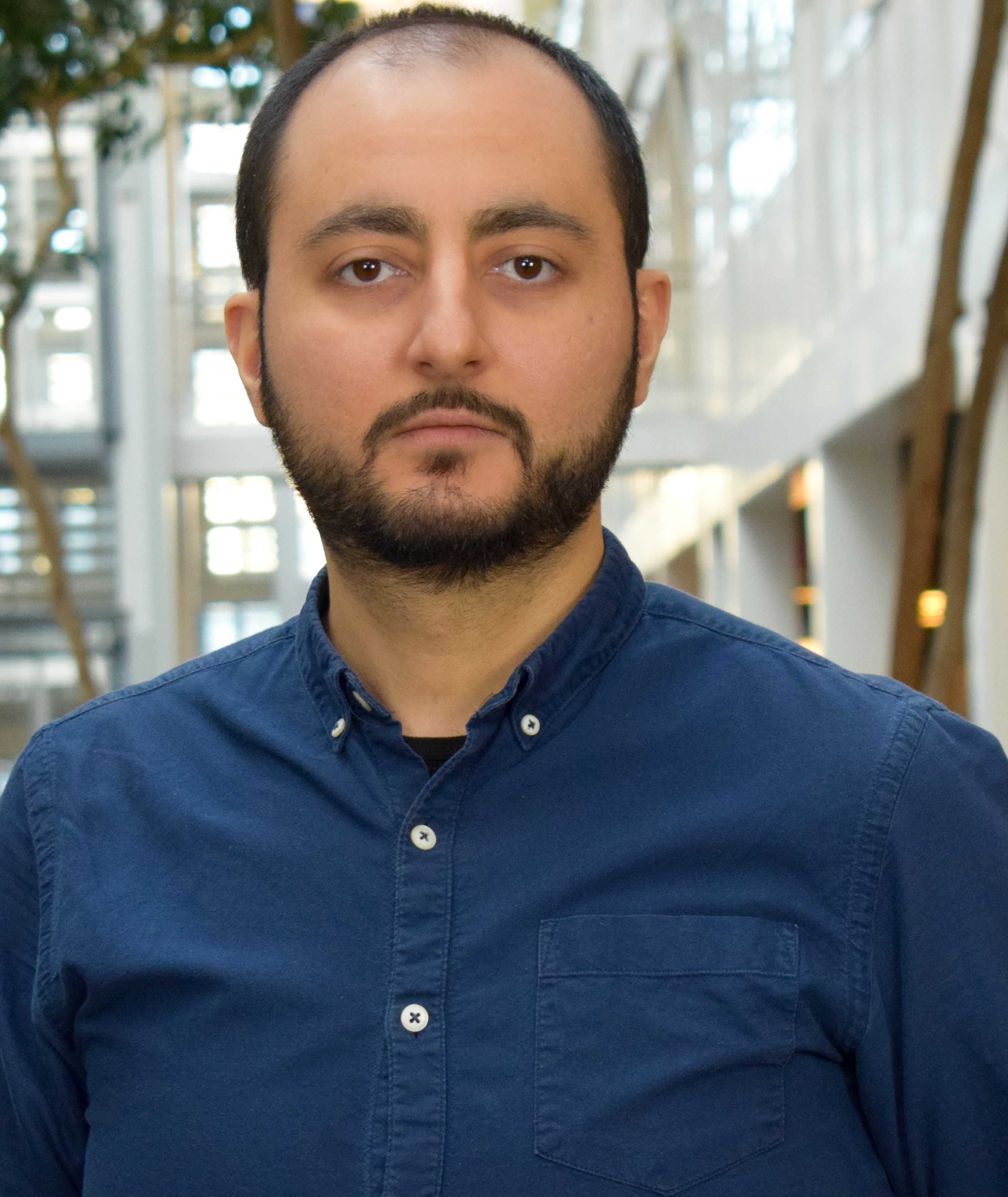
Aalborg University, Copenhagen
About
My work spans wireless and networked systems, 5G/6G and non-terrestrial networks, AI-native network management, mobility management, localisation, uncertainty-aware inference, and system-level optimisation. I am interested in when learning-based methods can be made robust, data-efficient, and trustworthy enough to operate inside real communication infrastructure, and in how information-theoretic principles can make those methods more reliable under data scarcity and distributional shift.
I have experience in industrially motivated projects and multi-partner research coordination, with applications spanning communications, defence-relevant autonomous systems, and cyber-physical infrastructures. I teach and supervise across BSc, MSc, PhD, and postdoctoral levels.
Research interests · machine learning for engineering systems · information-theoretic learning · wireless communications · 5G/6G and non-terrestrial networks · AI-native network management · URLLC and dependability · mobility management · localisation and sensing · system-level optimisation
Research themes
Machine learning for engineering systems
Reinforcement learning, multi-agent and hierarchical RL, data-driven control, uncertainty-aware modelling, explainability, and domain-grounded learning for complex engineering systems.
Information-theoretic learning and uncertainty
Information-theoretic measures for model selection and dataset design, channel and signal classification, representation learning for physical-layer data, and reliable inference under data scarcity and distributional shift.
Communication systems and networked engineering
Wireless networks, non-terrestrial networks, resource allocation, mobility management, URLLC, localisation, sensing, and signal processing.
System-level networking and management
Reliability, traffic management, network architecture, and AI-assisted resource allocation and control across terrestrial, aerial, and non-terrestrial systems.
Industrial and collaborative research
Project leadership and collaboration with Airbus, Ericsson, Deutsche Telekom, Turkcell, Viavi, and other stakeholders through national and international consortia.
- Learning-based and model-based methods for mobility management and service availability in cellular-connected UAV systems, establishing when machine learning delivers reliable operational gains over analytical control design.
- Multi-agent and hierarchical deep reinforcement learning for communication-system control — handover management, dynamic cluster reconfiguration, power allocation, and trajectory-aware optimisation.
- Information-theoretic and ML methods for engineering inference and representation, including channel classification via Hankelization, learnability-oriented dataset clustering, denoising-autoencoder methods, AI-assisted localisation, and uncertainty-aware decision support.
- Reliability meets learning for safety-critical communications: risk-aware resource allocation for URLLC and dependability-oriented AI-native network design.
- Combining communication-theoretic modelling with machine learning across wireless sensing, non-terrestrial networks, spectrum sharing, and intelligent network management.
News
- 2026Tutorial at IEEE EuCNC 2026, Malaga: 6G Connectivity for Flying Vehicles — Integrated Architecture, Mobility Intelligence, and Operational Reliability.
- 2026Organizer of the IEEE EuCNC 2026 special session Unified Terrestrial and Non-Terrestrial Networks for 6G: Towards Seamless 3D Connectivity.
- 2026Tutorial at IEEE VTC-Spring 2026, Nice: 6G Non-Terrestrial Networks — Open RAN, Handover, and Service Availability for LEO Satellites and HAPS.
- 2026TPC Co-Chair, Satellite Networks and Integrated Space-Air-Ground Networks track, IEEE CCNC 2027.
- 2025Scientific Advisory Board member, SMART 6G-SAT Center, Stockholm.
- 2025Associate Editor, IEEE Transactions on Vehicular Technology.
- 2025Best Paper Award at IEEE ASMS/SPSC 2025, Sitges, Spain.
- 2025Tutorial and workshop organizer at IEEE PIMRC 2025, Istanbul, on 6G for connected sky and near-field communications.
- 2024Associate Editor, IEEE Transactions on Mobile Computing.
Selected publications
- Independent PPO-based robust and scalable three-dimensional configuration for green massive MIMO networks
- Hierarchical multi-agent DRL-based dynamic cluster reconfiguration for UAV mobility management
- 6G for connected sky: holistic adaptive combined airspace and non-terrestrial network architecture
- Mobility management for cellular-connected UAVs: model-based versus learning-based approaches for service availability
- A survey of wireless networks for future aerial communications (FACOM)
- Risk-aware resource allocation for URLLC: challenges and strategies with machine learning
Experience
-
2024 — present
Assistant Professor, Aalborg University
Department of Electronic Systems, Copenhagen. Research and teaching in wireless communications, networking, Internet of Things, and machine learning for communication systems. Semester coordinator for Cyber- og Computerteknologi 5; course responsible for Probability & Statistics, IoT, Computer Architecture & OS, and Mobile Communication Systems.
-
2018 — present
Researcher, KTH Royal Institute of Technology
Stockholm. Research on aerial communications, non-terrestrial networks, wireless power transfer, machine learning, and IoT, together with technical coordination in academic–industry collaborations and supervision of PhDs, postdocs, research engineers, and MSc students.
-
2011 — 2017
Research and Teaching Assistant, Koç University
Istanbul. Doctoral research on next-generation cognitive wireless networks under Prof. Ozgur B. Akan.
-
2025 — 2027
3D-NET — 3D Networks for 6G Mobile Communications
Eureka CELTIC-NEXT, approx. €14M. Primary author and one of the technical coordinators; led proposal preparation and coordinated collaboration among 20+ partner entities from 8 countries.
-
2024 — 2025
Self-Learning Drone Surveillance
Vinnova project, 1 MSEK. Co-applicant and proposal writer.
-
2022 — 2025
6G-SKY — 6G for Connected Sky
Eureka CELTIC-NEXT, approx. €9M. Primary author and coordinator for the Swedish national submission; project manager and technical coordinator responsible for consortium meetings, workshops, stakeholder communication, deliverables, and milestones.
-
2022
Techno-Economic Analysis for Aerial Connectivity
Bilateral project with Airbus, €48K.
-
2021
Security Architectures for Heterogeneous Networks
Bilateral project with Airbus, €48K.
-
2013 — 2017
Ph.D., Electrical & Electronics Engineering
Koç University, Istanbul. Dissertation: Advanced Communication Techniques for Next-Generation Cognitive Wireless Networks. Supervisor: Prof. Ozgur B. Akan.
-
2011 — 2013
M.Sc., Electrical & Electronics Engineering
Koç University, Istanbul. Thesis: Clustering, Coverage and Network Coding in Cognitive Radio Sensor Networks. Supervisor: Prof. Ozgur B. Akan.
-
2006 — 2011
B.S., Electrical & Electronics Engineering
Middle East Technical University, Ankara. High Honor Degree, top 10 in a class of 200+.
Opportunities
Prospective students
I welcome inquiries from highly motivated BSc, MSc, and PhD students interested in wireless communications, non-terrestrial networks, machine learning for engineering systems, reinforcement learning, localisation, and network management. Please include a short motivation, your CV and current academic status, and — if available — transcripts, a project summary, or links to code or papers.
Prospective postdocs
I am also interested in hearing from postdoctoral candidates whose background aligns with 5G/6G systems, non-terrestrial networks, AI-native networking, learning-based control, communication theory, or reliable inference for engineering applications. A concise research statement, a note on how your expertise fits ongoing or future projects, and relevant publications or preprints are appreciated.
Contact
Mustafa Özger
Department of Electronic Systems
Aalborg University, Copenhagen, Denmark